« 2026. # 4 (190)

The Ethnology Notebooks. 2026. № 4 (190), 1143—1149

UDK: 94(477):32+929+061.23:06.023.6+008(477)(045)

DOI https://doi.org/10.15407/nz2026.04.1143

  • Received: 07.07.2026
  • Accepted: 14.07.2026
  • Published: 23.09.2026

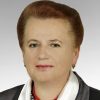
THE UNBREAKABLE GENETIC CODE OF UKRAINIANS (BASED ON THE LIFE PATH OF IRENA BACHINSKA-CHABAN)

STELMASHCHUK Halyna

  • ORCID ID: https://orcid.org/0000-0002-5607-4936
  • Doctor of Art History, Professor, Academician
  • of the National Academy of Arts of Ukraine,
  • Professor of the Department of Design
  • of the Lesya Ukrainka Volyn National University,
  • 13, Voli Avenue, 43025, Lutsk, Ukraine,
  • Contacts: e-mail: g_stelm@ukr.net

Abstract. The article is devoted to the activities of Irena Bachynska-Chaban, from the Bachynsky family, coat of arms Sas Drag. Her life and fate as a representative of a noble family under the totalitarian Soviet regime are highlighted. Her struggle for an Independent Ukraine is revealed: initially in Ukraine — Irena was one of the first members of the Ukrainian Helsinki Union and the founder of the UHS branch in Stryi, as well as of other movements organized in Stryi and Lviv. Political prisoners released from camps found shelter in her apartment, in particular the famous politician Vyacheslav Chornovil, whom she helped in publishing the magazine «Ukrainian Herald» and in distributing its materials. Together with other members of the UHS, they helped Vyacheslav Chornovil travel to meetings with the public. Since 1989, she continued her active work in aid of Ukraine from the USA, where Ms. Irena was forced to go for surgery and treatment.

The purpose of the article is to reveal the activities of Irena Bachynska-Chaban, who, with dignity, throughout her life, defended the ideas of her family — the formation of an Independent Soborna Ukraine — affirmed them and helped in every way the formation and development of Independent Ukraine.

The methodological basis of the study is a comprehensive scientific approach, which includes a combination of chronological, biographical, cultural-historical, and source analysis.

Keywords: Stryi, Bachynsky family, Irena Bachynska-Chaban, V. Chornovil, «Ukrainian Herald», political prisoners.

Read»

Our authors
Traditional folk clothes of velikobychkovsky hutsuly of XIX — the first half of XX century
In the study based upon numerous field materials, literature sources as well as ethnographic, historio-cultural and regional museum collections has been performed complex analysis in traditional folk clothes by Hutzul population of Velyky Bychkiv village in Transcarpathian region. Detailed descriptions of femi­nine and masculine clothing complexes of the mentioned area have been presented. In characterizing of those main attention has been paid to the detail of cut in separate components of dress; cut of feminine shirt has been added as an illustration.
Read »

Wax candle as ukrainian Christmas and epiphany ritualistic text
For the first time in native ethnology the article has brought some results of special study in sign functionality of a wax candle under the context of Ukrainian Christmas and Epiphany ritualistic text (ritualism of Christmas Eve, New Year, Epiphany Eve and Feast of Epiphany). The study has stated extremely high semiotic position of a wax candle as projection of Sun, mediator between the spheres of sacral and prophane elements, symbolic analogue of human existence, apotropy, cultural symbol re-establishing borders of acculturated space.
Read »

On field exploration of russian and belarusian ethnologists and etnolinguists in Ukrainian Polisia 1945—1980s
In the study based on a wide range of literary materials have been comprehensively characterised field research in Polisia of Ukraine, performed by Russian and Belarusian ethnologists during 1945—1980s as well as Moscow ethnolinguists and other researchers from ethnologic centres of Russia, Ukraine and Belarus in the course of realization of Ethnolinguistic Atlas of Polisia program. Particular attention has been paid to geography, methods, themes and research results of scientific projects.
Read »

Boikos’ pandemonium: categories of evil deceased
In the article have been presented some research-work on peculiarities of Boikos’ traditional demonological notions as for so-called evil deceased; on the basis of field records and ethnological literary sources quite a number of scum categories have been defined as well as essential habits, modes of behavior and functions of these personages of people’s demonology.
Read »